
by Rebecca Marquardt, Landscape Architect Designer, Naturalist
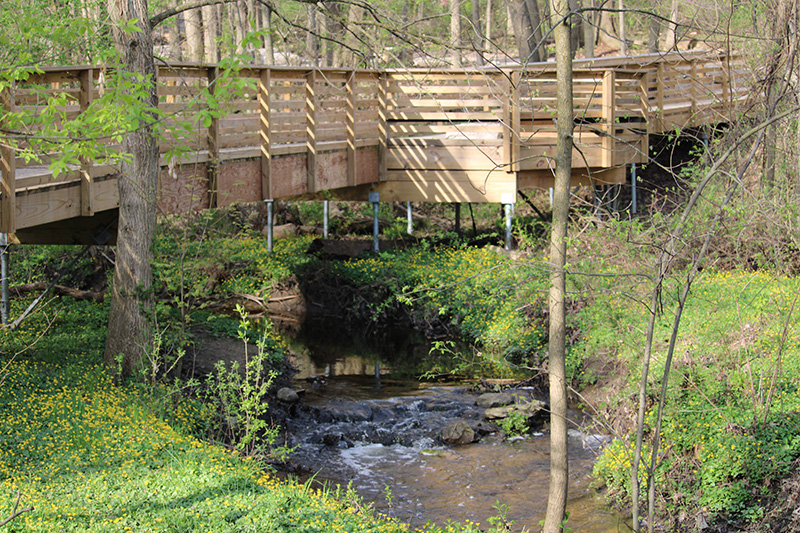
The forest on the west side of the Marywood campus serves as a vital habitat corridor in the heart of Grand Rapids. Unfortunately, it is also overgrown with invasive shrub species.
We have a special learning and service opportunity on November 13, 14 and 21 to embark upon something we have not yet ventured into this season: forest stewardship. Thanks to community partner Kent Conservation District and grant funding they secured for this initiative through the Wege Foundation, we are turning our attention to the forest on the far west side of the campus.
Over time, the invasive trees and shrubs outcompete ecologically balanced native species and cause significant harm to the plants and animals that have found refuge here. The most concerning invasive “woody” plants we will be targeting for the forest stewardship workdays will be Buckthorn and non-native Honeysuckle.
Seeking Volunteers from Neighborhood & Community
We are seeking volunteers and encouragement on this mission of caring for Earth in community with others. Join for the workday activities — stop by to cheer from the sidelines or dive in with us to make a dent and save the trees of this forest! Invite others to learn-by-doing land stewardship together in this important woodland habitat. No experience is necessary. Lunch will be provided during the Saturday workdays. Refreshments and sincere gratitude for your participation will also be provided.
NOVEMBER FOREST STEWARDSHIP WORKDAYS:
- Friday, Nov. 13, 9:00 am-12:00 pm (morning only)
- Saturday, Nov. 14, 9:00 am – 3:00 pm (morning and afternoon shifts)
- Saturday, Nov. 21, 9:00 am – 3:00 pm (morning and afternoon shifts)
REGISTER NOW Registration required for hands on work, see more details here: https://forms.gle/xi8DVFo86KNRUMSf7
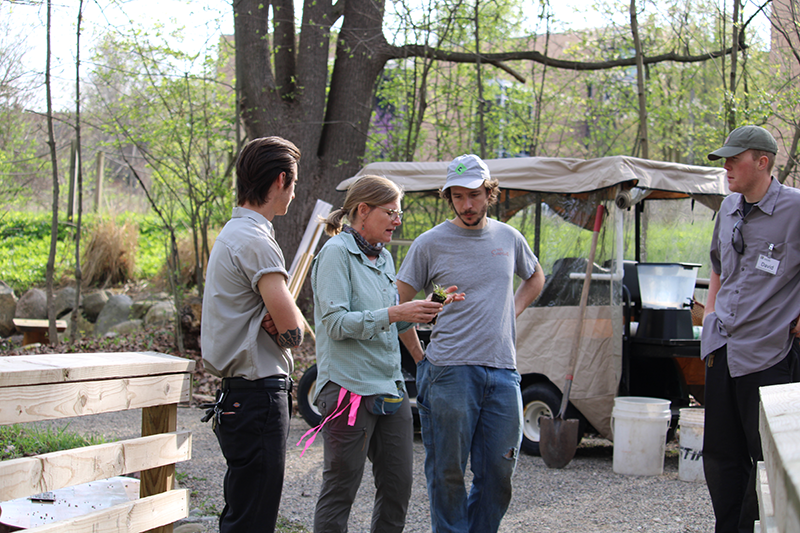
Join us in the forest in November!
Griffin Robertson, Rebecca Marquardt, Ian Todd, Dave Robinson (Dominican Sisters ~ Grand Rapids Land Management Team)
Objective: Manage and Remove Invasive Species in Woods at Marywood in Grand Rapids
As is the case in most urban forests, the rapid spread of non-native, invasive Buckthorn and Honeysuckle have impaired the ecological health of these woods by outcompeting the biodiverse plant community that is naturally found on this land.
In order to repair habitat, it is critical that we first manage the invasive species through removal. This is a large scale effort that will take many years (decades) of careful land care and management. It is only through partnerships and community support that we can even begin the process. Thank you for interest in participating in this ambitious, yet tremendously rewarding effort.
Where Did Invasive Plants Come From? Why are they Problematic?
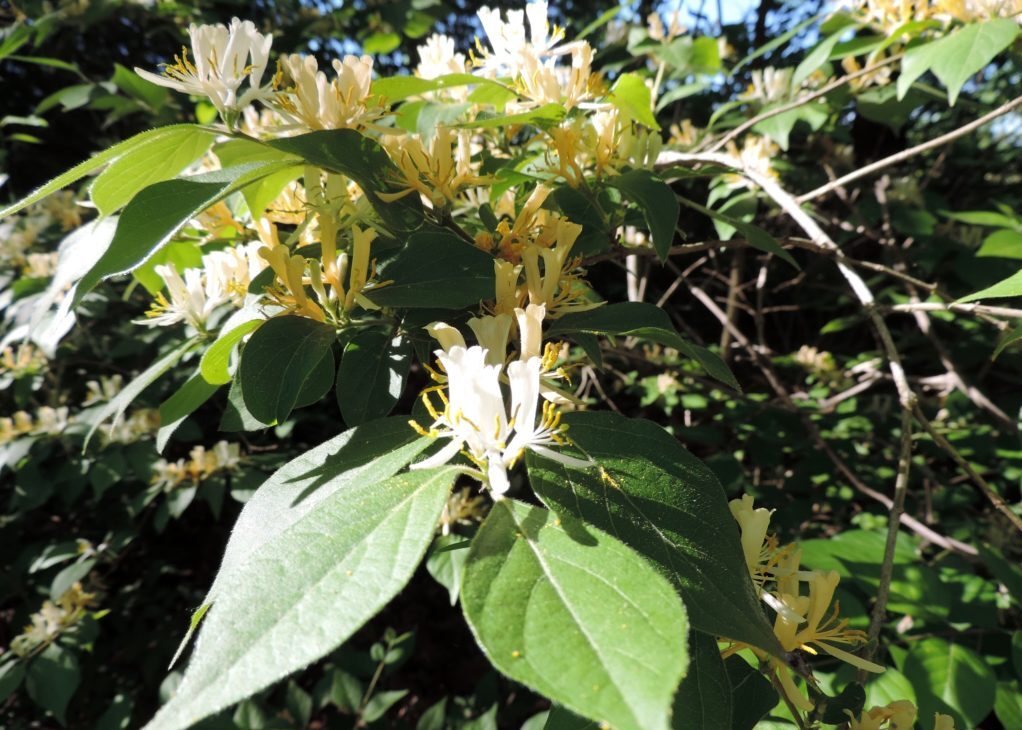
Morrow’s honeysuckle (Lonicera morrowii) is an invasive shrub from eastern Asia that was brought to the United States in 1852 as an ornamental and for erosion control [1][3]. It forms dense thickets in woodland edges, old fields, and yards, spreading when birds eat its red berries and drop the seeds [2][3]. MISIN tracks it because it leafs out early and shades out native wildflowers, shrubs, and tree seedlings [2][4]. Source https://www.misin.msu.edu/facts/10
Common buckthorn is native to Eurasia and was introduced
to North America in the 1880s as an ornamental plant. Its
abundant fruit is dispersed by birds and it spreads rapidly,
replacing native vegetation and lowering species diversity.
Like many non-native shrubs, common buckthorn leafs out
early in spring and retains its leaves late into fall, shading out
spring wildflowers and tree seedlings. Source https://mnfi.anr.msu.edu/invasive-species/CommonBuckthornBCP.pdf
About Rebecca Marquardt
Rebecca Marquardt is a Landscape Architect, SITES AP credentialed sustainability expert, and Owner of Revery based in Grand Rapids, Michigan. Working with the Dominican Sisters ~ Grand Rapids land management team, she is the lead campus naturalist overseeing the landscape master vision and implementation of the Congregation’s land stewardship initiative.

This sounds like a brilliant initiative. I am keen to help clear the buckthorn and honeysuckle; it is vital work for the woodland.