
by: Rebecca Marquardt, Landscape Architect, Designer | Land Stewardship Dominican Sisters ~ Grand Rapids
Autumn is a dynamic season as we enjoy evolution of color and activity in our landscape on the Marywood Campus of the Dominican Sisters ~ Grand Rapids. So many good neighbors are assisting in stewarding the grounds at Marywood as we foster healthy habitats and beautiful native gardens.
Let’s take a moment to honor some of the highlights of October!
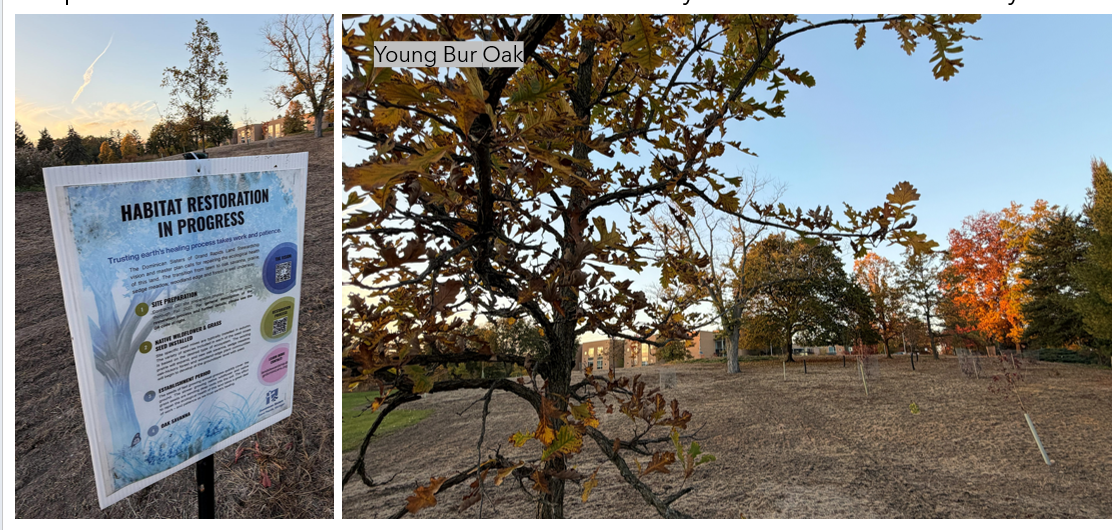
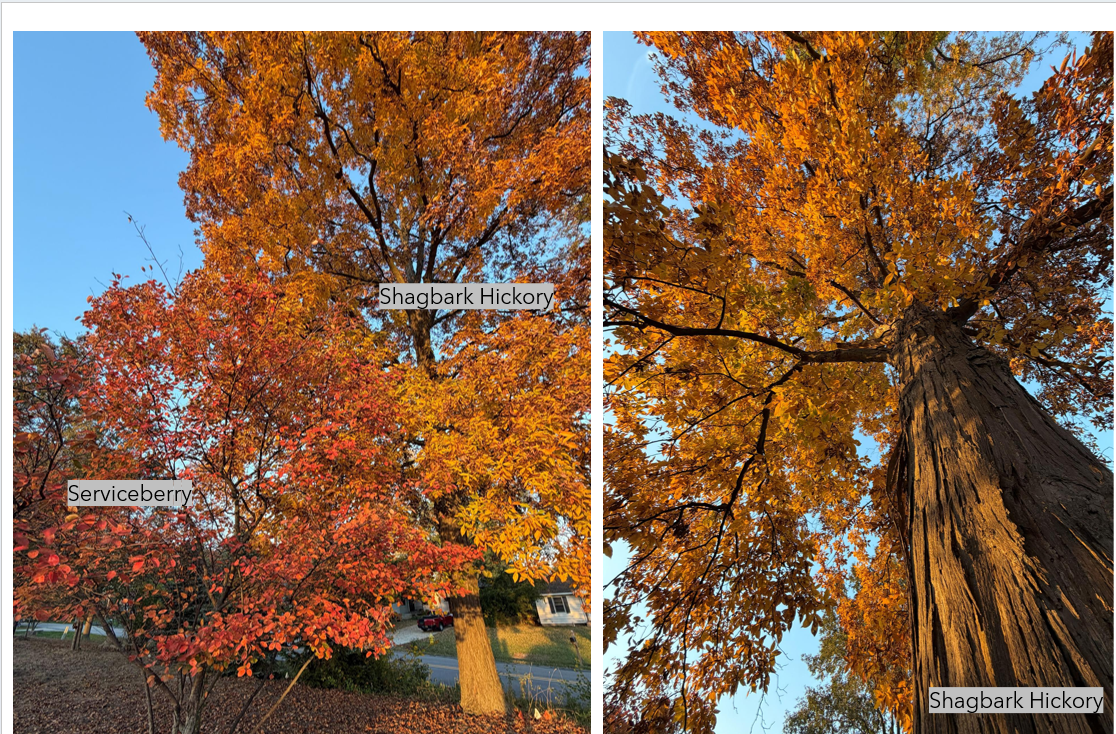
Here are some snapshots of the beautiful fall color we are savoring, and an expression of the enthusiasm we are experiencing on the Marywood campus lately. Below are photos from the viewing perspective from the bottom of the hill as you enter the campus off Fulton Street heading up Lakeside Drive. We hope you can get a sense of the scale of an ecological restoration project that is well into its official second year.
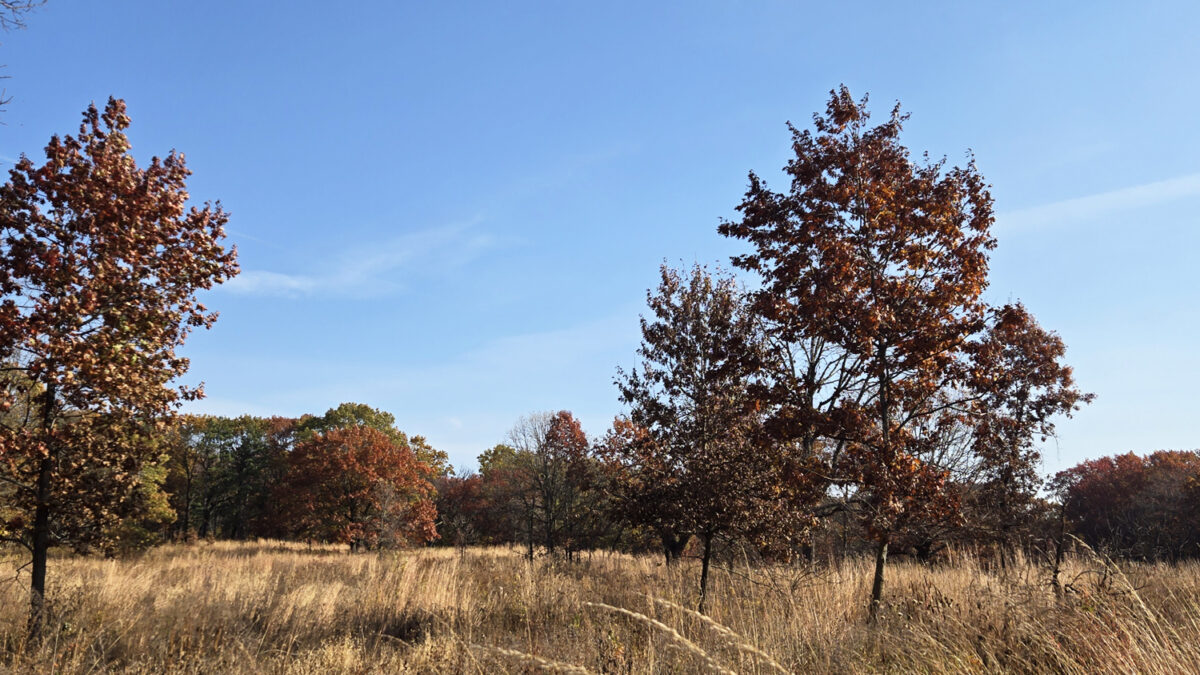
In the first image, as you look up the hill towards the Marywood building, you see scattered young Oak trees with just-seeded native short grasses (admittedly, only looks like bare soil). For a sense of what this might look like in decades to come, see the image from the University of Wisconsin-Madison arboretum.
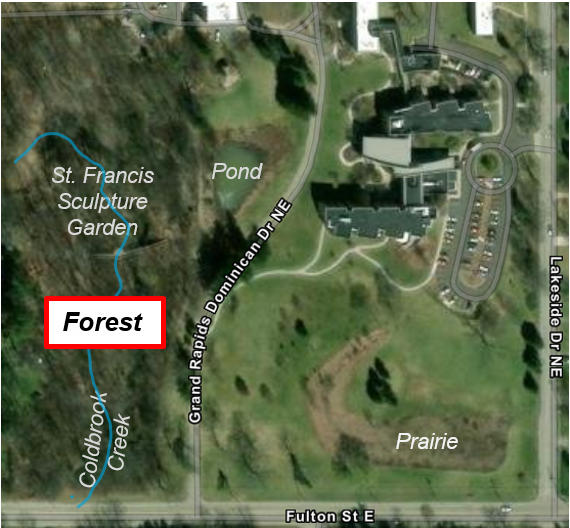
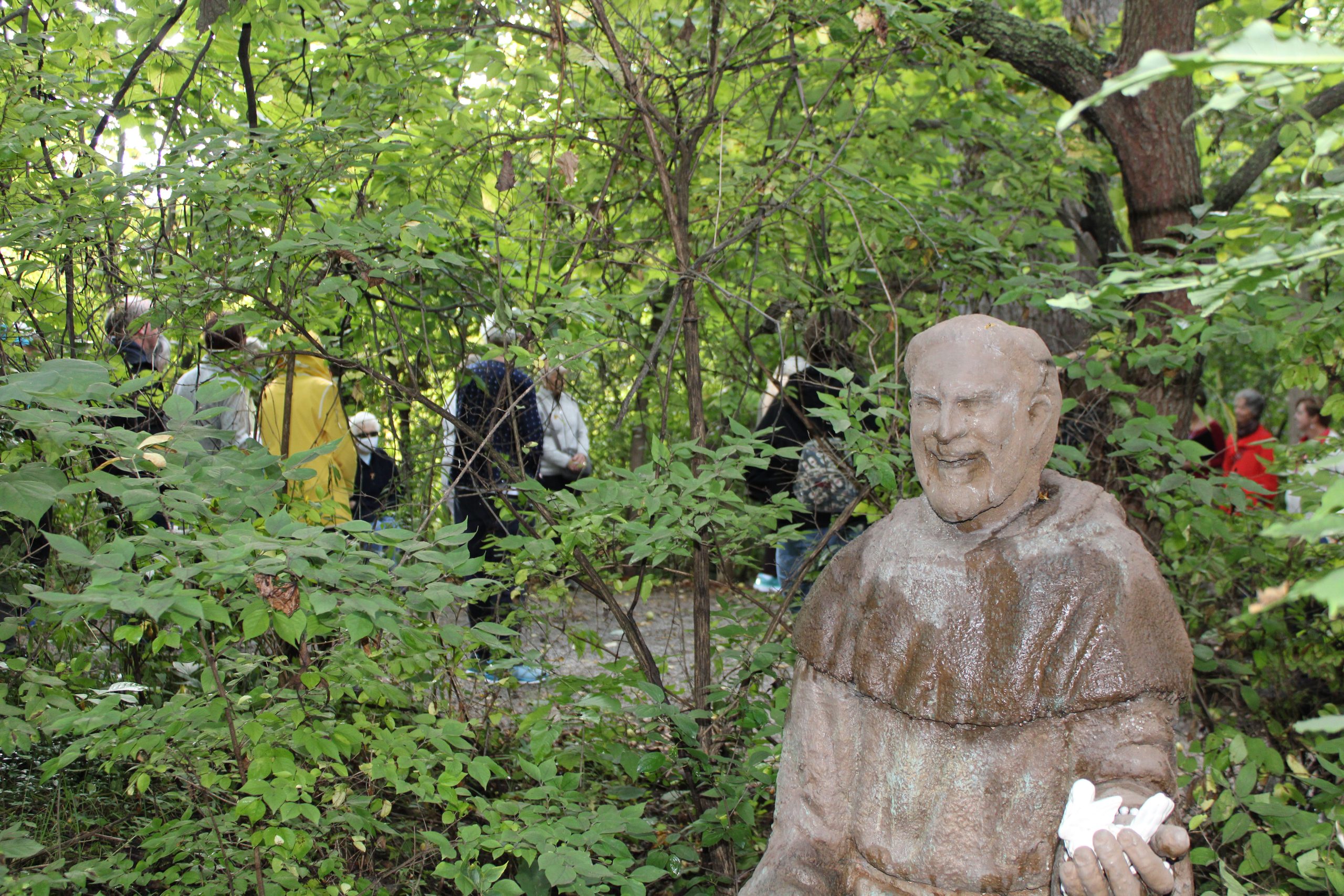
The forest contains natural and cultural amenities for wildlife and people. The Coldbrook Creek, a tributary of the Grand River, runs through its interior and the St. Francis Sculpture Garden provides a walking path with contemplative stopping points centered around sculptures that promote peace through depictions of the patron saint of animals and ecology.
Like many urban wooded areas, this natural area serves as a refuge for many forest inhabitants but, unfortunately, also high populations of non-native, invasive trees and shrubs that birds have introduced by consuming their fruit in outlying areas and depositing their seeds onto the forest floor.
Over time, the invasive trees and shrubs outcompete ecologically balanced native species and cause significant harm to the plants and animals that have found refuge here. The most concerning invasive “woody” plants we will be targeting for the forest stewardship workdays will be Buckthorn and non-native Honeysuckle.
In November, the Dominican Sisters ~ Grand Rapids in partnership with the Kent Conservation District, are hosting several work days to focus specifically on removing invasives from the forest surrounding the St. Francis Sculpture Garden. Learn more
Venture into the forest with us for November work days, to witness what is happening to the ecological integrity of this special natural area. You will soon discover that magnificent hardwood trees like Shagbark Hickory, Oak, Maple, Basswood, Black Walnut, along with interesting understory trees, like Pawpaw, and wide range of native groundcovers are becoming threatened by invasive shrubs.
About Rebecca Marquardt
Rebecca Marquardt is a Landscape Architect, SITES AP credentialed sustainability expert, and Owner of Revery based in Grand Rapids, Michigan.
Working with the Dominican Sisters ~ Grand Rapids, she is the lead campus naturalist at Marywood, overseeing the landscape master vision and implementation of the Congregation’s land stewardship initiative.